



Aktuelle Ausgabe
-
07.10.2026 HKCEC hosted 25 new exhibitions and conferences
The Hong Kong Convention and Exhibition Centre (HKCEC) has reaffirmed its standing as the venue of choice for leading global and Chinese Mainland organisers, emphasize those responsible.
-
05.10.2026 European Pavilion at Vietconcrete in Hanoi
The international concrete trade fair "Vietconcrete" will take place from April 20 to 22, 2027, in Hanoi, Vietnam. The event is organized by Informa Markets Vietnam, with Merebo Messe International organizing the Europe Pavilion.
-
01.10.2026 TCEB unveils six new MICE Cities
The Thailand Convention and Exhibition Bureau (TCEB) has certified six new destinations as MICE Cities, expanding Thailand’s nationwide MICE City network to 16 destinations under the “2026 MICE City: 16 Destinations” initiative.
-
25.09.2026 Dmg events appoints Agop Niksarlioglu as chief technology officer
Dmg events has appointed Agop Niksarlioglu as Chief Technology Officer, further strengthening its technology, data and digitization capabilities as the company continues to invest in digital innovation across its growing international events portfolio.
-
21.09.2026 AsiaWorld-Expo announced an invitation for global corporations
AsiaWorld-Expo (AWE) announced an invitation for global corporations and brands to submit Expression of Interest (EOIs) for the naming right and strategic brand partnerships for the flagship indoor multipurpose Super Arena at AWE Phase 2.
-
17.09.2026 Bematrix publishes Sustainability Report 2025
New report shares the strategy, targets and KPIs behind bematrix’s sustainability ambitions
-
15.09.2026 IAPCO and IFES extend their partnership
The International Association of Professional Congress Organisers (IAPCO) and the International Federation of Exhibition and Event Services (IFES) have strengthened their partnership.
-
09.09.2026 Accommodation specialist wins 2026 UFI Industry Partners Award
UFI, the global association of the exhibition industry, has named accommodation specialist bnetwork as the winner of the 2026 UFI Industry Partners Award.
-
07.09.2026 First ‘Africa Exhibition Forum’ takes place on 4 and 5 December
Exhibit Africa and jwc will hold the first edition of the ‘Africa Exhibition Forum’ on 4 and 5 December 2026, hosted by the Sarit Expo Centre in Nairobi.
-
02.09.2026 Battery & ES Tech Europe takes place in Barcelona
The inaugural edition of the event will feature nearly a hundred top-level experts who will address the challenges of the sector.
-
31.08.2026 New annual report published: AUMA Trends 2026/2027
The international reach of German trade fairs is one of their defining strengths and key competitive advantages, expresses the association of the German trade fair industry (AUMA).
-
28.08.2026 HKECIA reveals Hong Kong exhibition industry drives economic boost
According to the Oxford Economics study commissioned by The Hong Kong Exhibition & Convention Industry Association (HKECIA), Hong Kong’s exhibition industry continues to serve as a key economic catalyst.
-
26.08.2026 EWB gears up to welcome 93rd UFI Global Congress
Exhibition World Bahrain (EWB) is set to welcome the highly anticipated 93rd UFI Global Congress, taking place from 2-5 November 2026 at EWB.
-
25.08.2026 First phase of the extension of the Helsinki Expo completed
The first visible phase of the construction of Solar, the extension of the Helsinki Expo and Convention Centre, has been completed.
-
20.08.2026 ITB Americas: program for hosted buyers
ITB Americas, taking place 10 – 12 November 2026, in Guadalajara, Mexico, continues to gain momentum.
-
17.08.2026 Hong Kong: Five fairs attract over 520,000 visits
The Food Expo, Beauty & Wellness Expo and Home Delights Expo, organised by the Hong Kong Trade Development Council (HKTDC), concluded successfully today.
-
11.08.2026 Impact is expanding accessibility
Ahead of welcoming the global prosthetics, orthotics and assistive technology community to Bangkok in March 2027, Impact Muang Thong Thani is highlighting the barrier-free access built into every hall.
-
07.08.2026 IEG approves the half-year financial Report
In the first half of the year, the Italian Exhibition Group achieved revenue of €162.8 million, nine percent more than in the same period of 2005.
-
06.08.2026 Hyrox to host largest-ever race in Asia
Global fitness race Hyrox is accelerating its expansion across Asia, with plans to stage its largest-ever race in the region, “BYD Hyrox Bangkok”
-
05.08.2026 Fitur Cruises 2027 marks its sixth edition
The specialist section of Fitur is expanding its space in Hall 4 and solidifying its position as a hub for business, knowledge and inspiration for cruise lines, destinations, travel agencies and travellers, with Puerto Rico as its sponsor.
Evolving in the digital ara: advocating for agile organizations
12.01.2024
This article delves into the necessity of agile internal structures within the trade fair industry, emphasizing the importance of embracing digital competencies, restructuring organizational frameworks, and fostering a demand-driven approach.
By
Ton Otten, Director International, Jaarbeurs VNU
The article provides a comprehensive roadmap for digital
transformation and agility, offering actionable steps to navigate the dynamic
market and seize growth opportunities.
The philosophy of change:
In Giuseppe Tomasi di Lampedusa's classic work "The
Leopard" (1958), the core message is encapsulated in the statement:
"Everything needs to change so that everything can stay the same."
This philosophy underscores the paradox that change is essential for
maintaining stability and continuity. Trade fair organizers derive their raison
d'être from this principle, leveraging principles throughout the value chain to
adapt to changes and trends, staying relevant on both the demand and supply
sides.
Challenges Post-Covid-19:
Despite a rapid recovery post the Covid-19 period, the trade fair
industry faces a resurgence of challenges in their size-wise unbalanced and
mature portfolios. While inflation has boosted revenues, the lack of organic
growth, absence of in-house start-ups, and insufficient digitalization threaten
the sector's relevance.
Internal organization in the spotlight:
Similar to how trade shows require continuous refreshing, our
organizational structure, processes, and culture need more frequent updates
during these turbulent times. While cars remain cars and trade shows remain
trade shows, everything, including systems, methods, and processes, must change
to stay competitive. Generally, our industry tends to lag behind in adopting
and effectively integrating business process improvements. The result is that
the organization of trade shows is characterized by a high degree of craftsmanship
supported by relatively simple digital tools. Sustaining growth demands a shift
in focus to transform our organizations into modern, digitally-driven, and
adaptive entities.
Digital era and organizational structures:
Organizational structures built on old principles necessitate
critical evaluation. Although "Structure follows Strategy" (Chandler)
implies the importance of structure, it does not diminish their primary role.
Digitally centralized roles, structures with excessive layers, and extensive
staff departments are generally not exemplary in adaptability, agility, and
innovation. Such structures align less with the current digital era and are
unattractive to millennials, not only as employees but also as our future
customers. It is crucial to address the underlying issues fundamentally.
Strategy and structure:
After the euphoria of the post-pandemic recovery, the old growth
issues are gradually resurfacing. In the article "How to Keep Our
Rheingold," (Ton Otten) it is explained that large exhibition companies in
the Rhine delta have been lacking growth for almost a decade. External factors
like labor shortages, inflation, and geopolitical issues may pose challenges,
but they shouldn't be excuses for not striving for growth. A future-proof business
operation based on value creation and growth requires a thoughtful strategy and
a structure encompassing processes and personnel capable of realizing set
goals. This compels us to reconsider organizational structures from the
analogue era in the current digital age.
Agility in action:
An effective organization is characterized more by a streamlined
structure with minimal hierarchies than by a complex layered hierarchy. The
focus should no longer be on structures tailored for economies of scale and supply-driven
output. Nowadays, it's about adopting a demand-driven approach to optimize the
customer journey and value creation. Thinking from an external perspective to
internal naturally leads to a structure with adaptive and innovative
product/market teams connected with the outside world. If we take our staff,
who are in the market day by day, seriously, we need to rethink the hierarchy.
In a successful football organization, the club staff contribute to the players
because they know they are the ones who can score and win matches.
New competencies in the digital era:
Creating product/market teams is not enough. The lack of Beta-skills
within product teams is another critical aspect. Digital competencies are
necessary to recognize and capitalize on growth opportunities. Besides
traditional roles, new competencies such as AI/ML specialists, DevOps
engineers, innovation managers, and customer experience specialists are
required. The natural inclination to centralize these roles should be avoided,
aiming for a mix of digital/technical and creative/organizational competencies
across all levels of the organization.
Automation and flexibility:
Achieving peak efficiency and effectiveness in your team requires an
ongoing business process improvement program. Permanently eliminating redundant
routines and finding the optimal balance between automation and flexibility not
only boosts the agility of product teams but also serves as a consistent
catalyst for change. Undoubtedly, those overseeing day-to-day operations are
best positioned to eradicate unnecessary complexity, streamline processes,
enhance output speed, and improve quality and productivity. Naturally, they
require the necessary skills, tools, and authority to accomplish these
objectives.
In conclusion:
There is an undeniable need to integrate digital competencies into
an organizational structure that enables synchronization with the external
environment and capitalizes on the growth opportunities that rapidly changing
markets offer. By taking the following steps, we move closer to our goals of
creating value and fostering growth. Here's the roadmap for Digital
Transformation and Agility to elevate the organization:
1. Evaluate and rethink organizational structures: Critically assess existing organizational structures based on old principles. While "Structure follows Strategy," structures should actively contribute to adaptability, agility, and innovation. Consider a shift to flat structures with minimal hierarchies.
2. Implement product/market teams: Reason from the outside to embrace demand-driven approaches. Introduce product/market teams as the pivot between the external environment and the organization. Consider these teams as the lever for value creation, akin to the value players bring to a championship team.
3. Develop new digital competencies: Acknowledge the lack of Beta-skills within product teams and invest in digital competencies. Integrate traditional roles with new competencies like AI/ML specialists, DevOps engineers, innovation managers, and customer experience specialists. Avoid centralization and aim for a balanced mix of digital/technical and creative/organizational competencies across all levels of the organization.
4. Automate Routines and enhance flexibility: Permanently eliminate unnecessary routines within processes and automate where possible, maintaining flexibility. Strike the right balance between automation and flexibility to enhance agility without adding unnecessary complexity to product teams.
5. Focus on continuous optimization: Aim for continuous optimization by periodically re-evaluating structures, updating digital competencies, and adapting processes to changing market needs. Ensure a dynamic approach that responds to new challenges and opportunities in the digital era.
Contact: ton.otten@jaarbeurs.nl
Share in Facebook, Twitter or Google+:


TFI - Trade Fairs International - The International Trade Fair Magazine.
© 2006 - 2026 by TFI-Verlagsgesellschaft mbH. All rights reserved. TFI-Verlagsgesellschaft mbH shall accept no responsibility for the contents of external links and other contents.
Brought to you by TCEB
-
Thailand: ASEAN’s Hub for Global Exhibitions

As the world becomes increasingly interconnected, exhibitions have evolved far beyond their traditional role as trade promotion platforms.
TFI-Know-how
-
What to do when things go wrong at virtual or in-person events?

In the event world, it’s simply part of life if things don’t work out as planned.
-
How can networking be made to work at online events?

Networking typically happens at real, in-person events. But it’s also possible to do it online; it just works a little differently. There are various options available to organisers.
-
How can exhibitors stand out at trade fairs?
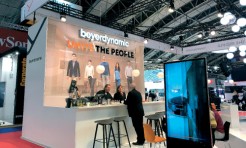
New products and a well-conceived stand design are not the only drivers for a successful presence. Many other factors are also important, but trade fair planners often lose sight of them.
-
How can industry decision-makers be reached online?

Trade fairs and trade fair companies need to constantly further develop, become more agile and flexible and offer services all year round. New, digital offerings are very important here. With its TrustedTargeting technology, Messe München offers its customers access to leading business-to-business decision-makers on the Internet.