



Germany 2027: Sparking debate in Europe
For the first time in the history of the Leipzig Book Fair, there will be joint guest country exhibitors next year. The focus will be on more than just literature.
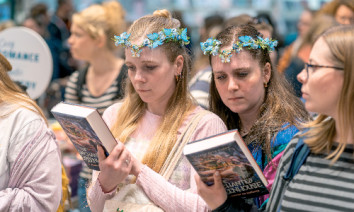
The Leipzig Book Fair will be taking place from 18 to 21 March 2027. The organisers are departing from the fair’s traditional guest country appearance. Three countries will be appearing jointly as the fair’s guest countries this time: Poland, France and Germany, which are sometimes referred to in the political sphere as the “Weimar Triangle”. Their appearance will be supported by the three countries’ national cultural institutions: the Polish Institute, the Institut Français and the Goethe Institute. Together with the event’s curator, Thorsten Dönges, the three institutions are developing a programme that brings together the literary perspectives of Poland, France and Germany. At the same time, it is intended to spark societal debates in Europe and stimulate curiosity: curiosity about each other, literature and the exchange of ideas and perspectives.
The Weimar Triangle’s appearance at the Leipzig Book Fair in 2027 will focus on what connects these three countries and societies but also on broader relationships, such as those between science, literature and the other arts, between literary genres, and between history and tradition, humanity and nature, and technology and media. The name Weimar Triangle was originally coined as a political term, representing the commitment of Poland, France and Germany to strengthening and further developing the idea of Europe together. Since its establishment in 1991, the Weimar Triangle has stood for dialogue, mutual understanding and a shared responsibility for Europe's future.
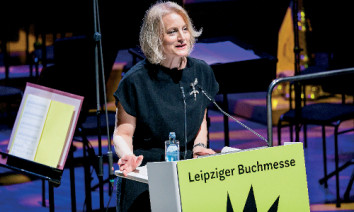
Astrid
Böhmisch, the director of the Leipzig Book Fair, says of the new approach: “It’s
fantastic that the guest country appearance of the Weimar Triangle at the
Leipzig Book Fair in 2027 will be making such a surprising and strong
statement.” The idea of giving centre stage to France, Poland and Germany
together was immediately persuasive because it seemed to represent a
contemporary progression of the guest country concept, according to Böhmisch.
Unlike in previous years, the focus this time will not be on representing the
literature of a single country. Instead, the joint appearance will offer “a
space for focusing on literature, cultural issues and societal and political
debates across national borders,” stresses Böhmisch.
The
content will be highly varied. What topics are the subject of debate in Poland,
France and Germany, for example? What are the conditions for understanding and
reconciliation, both today and in the past? How does trust develop, and how do
mistrust and misunderstandings arise?
What role do history and different views
of history play in current debates? The programme tackles the question of how
we can shape the future together and how crises and fears can be dealt with
better. In addition, there will also be a focus on the influence of new
technologies on society, politics and literature and on the genres that shape
the book market currently – as well as on the question of how the significance
of art and literature changes as far as young people are concerned. The
organisers believe that an exchange of ideas, a sense of solidarity and a
willingness to work together are now more important than ever
(www.leipziger-buchmesse.de).
Author: Peter Borstel
This article was published in TFI Issue 2/2026
Share in Facebook, Twitter or Google+:


TFI - Trade Fairs International - The International Trade Fair Magazine.
© 2006 - 2026 by TFI-Verlagsgesellschaft mbH. All rights reserved. TFI-Verlagsgesellschaft mbH shall accept no responsibility for the contents of external links and other contents.
Article from TCEB
-
Thailand: ASEAN’s Hub for Global Exhibitions

As the world becomes increasingly interconnected, exhibitions have evolved far beyond their traditional role as trade promotion platforms.
TFI-Know-how
-
What to do when things go wrong at virtual or in-person events?

In the event world, it’s simply part of life if things don’t work out as planned.
-
How can networking be made to work at online events?

Networking typically happens at real, in-person events. But it’s also possible to do it online; it just works a little differently. There are various options available to organisers.
-
How can exhibitors stand out at trade fairs?
New products and a well-conceived stand design are not the only drivers for a successful presence. Many other factors are also important, but trade fair planners often lose sight of them.
-
How can industry decision-makers be reached online?
Trade fairs and trade fair companies need to constantly further develop, become more agile and flexible and offer services all year round. New, digital offerings are very important here. With its TrustedTargeting technology, Messe München offers its customers access to leading business-to-business decision-makers on the Internet.