



Aktuelle Ausgabe
-
23.10.2026 UFI releases Euro Fair Statistics 2025
UFI, the global association of the exhibition industry, has released the 16th edition of the Euro Fair Statistics report, which provides certified data on the European exhibition market in 13 countries for 2025.
-
20.10.2026 ICC Sydney drives cultural, creative and commercial performance
International Convention Centre Sydney (ICC Sydney), managed by Legends Global, has unveiled its Annual Performance Review FY2025/26.
-
15.10.2026 Imex America: The benefits of being in the room
The business value of showing up in person was evident across day two of Imex America, with exhibitors securing new opportunities, buyers seeking emerging or new destinations and industry leaders exploring why human connection remains the event sector’s most powerful advantage.
-
07.10.2026 HKCEC hosted 25 new exhibitions and conferences
The Hong Kong Convention and Exhibition Centre (HKCEC) has reaffirmed its standing as the venue of choice for leading global and Chinese Mainland organisers, emphasize those responsible.
-
05.10.2026 European Pavilion at Vietconcrete in Hanoi
The international concrete trade fair "Vietconcrete" will take place from April 20 to 22, 2027, in Hanoi, Vietnam. The event is organized by Informa Markets Vietnam, with Merebo Messe International organizing the Europe Pavilion.
-
01.10.2026 TCEB unveils six new MICE Cities
The Thailand Convention and Exhibition Bureau (TCEB) has certified six new destinations as MICE Cities, expanding Thailand’s nationwide MICE City network to 16 destinations under the “2026 MICE City: 16 Destinations” initiative.
-
25.09.2026 Dmg events appoints Agop Niksarlioglu as chief technology officer
Dmg events has appointed Agop Niksarlioglu as Chief Technology Officer, further strengthening its technology, data and digitization capabilities as the company continues to invest in digital innovation across its growing international events portfolio.
-
21.09.2026 AsiaWorld-Expo announced an invitation for global corporations
AsiaWorld-Expo (AWE) announced an invitation for global corporations and brands to submit Expression of Interest (EOIs) for the naming right and strategic brand partnerships for the flagship indoor multipurpose Super Arena at AWE Phase 2.
-
17.09.2026 Bematrix publishes Sustainability Report 2025
New report shares the strategy, targets and KPIs behind bematrix’s sustainability ambitions
-
15.09.2026 IAPCO and IFES extend their partnership
The International Association of Professional Congress Organisers (IAPCO) and the International Federation of Exhibition and Event Services (IFES) have strengthened their partnership.
-
09.09.2026 Accommodation specialist wins 2026 UFI Industry Partners Award
UFI, the global association of the exhibition industry, has named accommodation specialist bnetwork as the winner of the 2026 UFI Industry Partners Award.
-
07.09.2026 First ‘Africa Exhibition Forum’ takes place on 4 and 5 December
Exhibit Africa and jwc will hold the first edition of the ‘Africa Exhibition Forum’ on 4 and 5 December 2026, hosted by the Sarit Expo Centre in Nairobi.
-
02.09.2026 Battery & ES Tech Europe takes place in Barcelona
The inaugural edition of the event will feature nearly a hundred top-level experts who will address the challenges of the sector.
-
31.08.2026 New annual report published: AUMA Trends 2026/2027
The international reach of German trade fairs is one of their defining strengths and key competitive advantages, expresses the association of the German trade fair industry (AUMA).
-
28.08.2026 HKECIA reveals Hong Kong exhibition industry drives economic boost
According to the Oxford Economics study commissioned by The Hong Kong Exhibition & Convention Industry Association (HKECIA), Hong Kong’s exhibition industry continues to serve as a key economic catalyst.
-
26.08.2026 EWB gears up to welcome 93rd UFI Global Congress
Exhibition World Bahrain (EWB) is set to welcome the highly anticipated 93rd UFI Global Congress, taking place from 2-5 November 2026 at EWB.
-
25.08.2026 First phase of the extension of the Helsinki Expo completed
The first visible phase of the construction of Solar, the extension of the Helsinki Expo and Convention Centre, has been completed.
-
20.08.2026 ITB Americas: program for hosted buyers
ITB Americas, taking place 10 – 12 November 2026, in Guadalajara, Mexico, continues to gain momentum.
-
17.08.2026 Hong Kong: Five fairs attract over 520,000 visits
The Food Expo, Beauty & Wellness Expo and Home Delights Expo, organised by the Hong Kong Trade Development Council (HKTDC), concluded successfully today.
-
11.08.2026 Impact is expanding accessibility
Ahead of welcoming the global prosthetics, orthotics and assistive technology community to Bangkok in March 2027, Impact Muang Thong Thani is highlighting the barrier-free access built into every hall.
UFI Global Barometer provides updates on Covid-19 impact and 2022 perspectives for the exhibition industry
24.02.2022
UFI, the global association of the exhibition industry, has released the latest edition of its flagship Global Barometer research, which takes the pulse of the industry.
The results highlight the quickening pace of the industry’s recovery in 2022, after the continuing impact of Covid-19 throughout 2021. There is a strong belief that the sector, primarily driven by physical exhibitions and business events, will bounce back quickly.
In terms of operations, the proportion of companies declaring “normal activity” has increased from less than two in ten, in July 2021, to around four in ten, between October 2021 and February 2022. And this looks set to increase to around six in ten companies expecting normal activity levels from March 2022. Subsequently, the proportion of companies expecting “no activity” dropped from 34% to 16% during the second half of 2021, and only 4-5% of companies expect no activity from March 2022.
The results vary depending on location, and are primarily driven by confirmed or expected “reopening dates” for exhibitions. When asked what elements would most help towards the “bounce-back” of exhibitions, seven in ten companies selected “Lifting of current travel restrictions”, while five in ten selected “Readiness of exhibiting companies and visitors to participate again”, “Mid-term visibility in terms of public policies, including travel restrictions” and “Lifting of current public policies that apply locally to exhibitions”.
Overall, 53% of companies received no public financial support, and for the majority of those who did, financial public aid represented less than 10% of their overall costs.
In line with results from the previous edition of the Barometer, released in the summer of 2021, “Impact of the Covid-19 pandemic on the business” remains the most pressing business issue – although this has dropped to 19% of respondents, from 29%, six months ago. There has also been a shift in the second and third most pressing issues, with “Internal management challenges” (19% of respondents, compared to 9%, six months ago) and “Impact of digitalisation” (16%, compared to 10%, six months ago) forming the top three. “Competition with other media” is now the fourth most pressing issue (14%, compared to 5%, six months ago) while “State of the economy in home market” drops to fifth spot (12%), from being the second most pressing issue just six months ago (19% of respondents).
The three components of “Internal management challenges” are all almost equally represented within the responses: “Human resources” (56% of respondents), “Business model adjustments” (54%) and “Finance” (48%).
In relation to future exhibition formats, the global results indicate that 80% of respondents (up from 78%, six months ago, and 64%, 12 months ago) agree that “Covid-19 confirms the value of face-to-face events”, and anticipate the sector to bounce back quickly (with 38% stating “Yes, for sure” and 42% stating “Most probably”). Meanwhile,13% of respondents are unsure.
“The sun is finally rising at the end of a long, dark pandemic,” says Kai Hattendorf, Managing Director and CEO at UFI. “The perspectives for 2022 are brighter and continue to improve quickly. As the industry bounces back, the key issues now facing companies are around internal management issues and the impact of digitisation. As the value of physical events is constantly reinforced, we are well on track to achieve pre-pandemic levels of activity.”
Size and scope
This latest edition of UFI’s bi-annual industry survey was concluded in January 2022 and includes data from 401 companies in 53 countries and regions.
The study also includes outlooks and analysis for 24 focus countries and regions – Argentina, Australia, Brazil, Chile, China, Colombia, France, Germany, Hong Kong, India, Italy, Japan, Malaysia, Mexico, Russia, Singapore, South Africa, South Korea, Spain, Thailand, Turkey, the UAE, the UK and the US – as well as an additional five aggregated regional zones.
Operations – reopening exhibitions
Detailed results indicate that:
- In North America, the proportion of companies declaring a normal level of activity is growing steadily, from less than one in ten, in July 2021, to at least six in ten, from February 2022
- In several major markets across Central and South America, most companies saw normal activity levels between September and November 2021, and more than eight in ten expect normal activity levels from February 2022.
- In Europe, most companies saw normal activity levels between October and November 2021, and expect the same from March 2022, onwards. However, the picture changes across different countries, with for example a majority of companies seeing normal activity on a larger period in Russia, Spain and, to some extent, Turkey, while in Germany, this is not expected until May 2022.
- The situation is also very different across countries in the Asia-Pacific and Middle East and Africa, where Japan and UAE appeared to be less severely hit than other countries during the second half of 2021, and only Australia, India and Malaysia are also expecting to return to normal activity levels during the first half of 2022.
Turnover – operating profits – public financial support
Globally, and on average, companies saw a 2021 turnover of just 41% of 2019 levels, and project that this will increase to 71%, of the same baseline, in 2022. Still, many countries are performing well above average, including:
- For 2021 revenues, France (62% of 2019 levels), Russia (61%), China (60%), Japan (55%), South Korea (54%), UAE (53%) and Spain (50%)
- For projected 2022 revenues, USA (84% of 2019 levels), Brazil and France (79%), Spain (78%), Colombia, China and Japan (77%), and Thailand and UK (76%).
In terms of operating profit for 2021, 27% of companies globally reported a loss, and 26% reported a reduction of more than 50%, compared to 2019 levels. All regions include countries with a higher than average proportion of companies declaring a loss in 2021:
- Mexico (33% of companies) in North America
- Argentina (50%), Brazil (44%), Chile (38%) and Colombia (42%) in Central and South America
- Germany (44%) in Europe
- South Africa (36%) in the Middle East and Africa
- Australia (30%), India (29%), Malaysia (38%), Singapore (40%) and Thailand (38%) in the Asia-Pacific.
In terms of proportion of companies who’ve received no public financial support, the Asia-Pacific matches the global average of 53%. In Europe, this proportion is lower than the global average (33%), but is higher in the Middle East and Africa (78%), North America (73%) and Central and South America (68%).
Key business issues
“Internal management challenges” represents the key business issue across Australia, Argentina and Mexico (22% of respondents), Spain (21%), Colombia (20%), Thailand (19%) and South Africa (18%).
In Germany, “Impact of digitalisation” is matched with “Impact of the Covid-19 pandemic on the business” as the most pressing issue (20% of respondents).
The picture is different depending on the activity type of respondents. For organisers and venues, “Impact of Covid-19 pandemic on the business” is the top issue (20% and 19% of respondents respectively), followed closely by “Internal management challenges” (18% for both categories) and “Impact of digitalisation” (17% and 14%).
Service providers, however, rank “Internal management challenges” (21% of respondents) ahead of “Impact of Covid-19 pandemic on the business”, “Impact of digitalisation” and “Competition with other media” (16% of respondents for each).
Future exhibition formats – physical and digital events
In addition to the 80% of companies who are confident that “Covid-19 confirms the value of face-to-face events”:
- 44% (compared to 46%, six months ago, and 63%, 12 months ago) believe there will be “Less international ‘physical’ exhibitions, and, overall, less participants” (with 6% stating “Yes, for sure” and 38% stating “Most probably”), while 30% are unsure.
- 73% (compared to 76%, six months ago, and 80%, 12 months ago) believe there is “A push towards hybrid events, more digital elements at events” (with 24% stating “Yes, for sure” and 49% stating “Most probably”), while 15% are unsure.
- 10% (compared to 11%, six months ago, and 14%, 12 months ago) agree that “Virtual events are replacing physical events” (with 2% stating “Yes, for sure” and 9% stating “Most probably”), while 18% are unsure and 54% state “Definitely not”.
The results show no significant differences across different regions.
Climate change and Net Zero Carbon Events
In the context of the recently launched “Net Zero Carbon Events initiative”, the Barometer surveyed the perception and engagement of the industry on this issue. Global results indicate that:
- 66% of respondents are confident that “This initiative is of key relevance to secure the future of the industry”, just weeks after it was launched
- 91% of companies agree that “It is important that the event industry works together to reduce the environmental impact of the components it controls (production of the event)”
- 89% of companies believe that “It is important that the event industry works with its clients (participants) and other stakeholders (destinations, transport and accommodation) to reduce the environmental impact of the other components attributed to events”.
Regarding the deadline for companies to achieve Net Zero Greenhouse Gas emissions:
- 23% of respondents are sure “My company will achieve Net Zero Greenhouse Gas emissions before 2050”, while 31% believe this is “Most probably” the case and 33% are unsure.
- 69% of respondents are confident that “My company will achieve Net Zero Greenhouse Gas emissions by 2050” (with 41% stating “Yes, for sure” and 28% stating “Most probably”), while 24% are unsure.
Background
The 28th Global Barometer survey, concluded in January 2022, provides insights from 401 companies, across 53 countries and regions. It was conducted in collaboration with 21 UFI member associations:
Share in Facebook, Twitter or Google+:


TFI - Trade Fairs International - The International Trade Fair Magazine.
© 2006 - 2026 by TFI-Verlagsgesellschaft mbH. All rights reserved. TFI-Verlagsgesellschaft mbH shall accept no responsibility for the contents of external links and other contents.
Article from TCEB
-
Thailand: ASEAN’s Hub for Global Exhibitions

As the world becomes increasingly interconnected, exhibitions have evolved far beyond their traditional role as trade promotion platforms.
TFI-Know-how
-
What to do when things go wrong at virtual or in-person events?

In the event world, it’s simply part of life if things don’t work out as planned.
-
How can networking be made to work at online events?

Networking typically happens at real, in-person events. But it’s also possible to do it online; it just works a little differently. There are various options available to organisers.
-
How can exhibitors stand out at trade fairs?
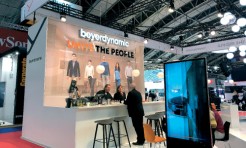
New products and a well-conceived stand design are not the only drivers for a successful presence. Many other factors are also important, but trade fair planners often lose sight of them.
-
How can industry decision-makers be reached online?

Trade fairs and trade fair companies need to constantly further develop, become more agile and flexible and offer services all year round. New, digital offerings are very important here. With its TrustedTargeting technology, Messe München offers its customers access to leading business-to-business decision-makers on the Internet.